-
Keep Steven Witmer’s Legacy Alive: Books for Students
A Memorial that Gives Back to the Community

Steven Witmer was a Teacher Librarian with the Saydel Community School District in Des Moines, Iowa, until he succumbed to Stage IV Colon Cancer on July 25, 2024. Steven had a passion for reading, exciting children about reading, teaching the students about the library, and having the students further develop their reading skills through selecting books that they wanted to read. Steven wanted the students, as well as adults, to “Stay Curious” and keep on learning.
When he was starting to go on disability in 2024 due to the cancer’s advanced progress, Steven started a GoFundMe campaign called “Books for Students” to raise money so that he could purchase a book for every student in the district’s elementary school. Steven had this goal as it was important to him “. . . to get books into the hands of students and encouraging reading.” And Steven was more than successful in achieving his goals with his campaign and was able to raise more than his goal amount. With the extra money raised, Steven was able to help three Iowa schools that had little funding for their school libraries’ needs.
In Steven’s 2024 GoFundMe campaign, he stated, “This may be my last opportunity to serve my students in this way. . .” This Memorial campaign is to raise money for an endowment to continue Steven’s vision, love of reading, and his legacy of creating lifetime readers alive for many years to come. I ask you to help reach the goal amount of this Memorial campaign for Steven Witmer, Teacher Librarian. Any amount raised over the set goal will be added to the endowment to further keep Steven’s legacy alive.
Thank you for your kindness and generosity.
Linda Green-Witmer, Steven Witmer’s wife
-
Critical Thinking: Red Herring

Time to talk about critical thinking again! Let’s talk about red herrings!
What is a red herring? Well, there are two ways to think about it. A red herring in a story (a play, movie, novel, etc.), usually in a mystery or thriller plot, is a misleading clue. It’s a device used to distract the reader/audience’s attention away from the the real plot. Red herrings can be used to heighten suspense or provide a plot twist.
The other type of red herring is an informal logical fallacy. It is an argument tactic in which one party tries to distract from the real issue by introducing something that is unrelated, or only tangentially related.
Here a couple of examples:
Daughter: Hey, Dad, I’ve been doing more chores, can I have a increase in my allowance?
Dad: Hey, it’s funny, you know what I did with my allowance when I was your age? I bought a Nintendo and my buddies and I spend hours after school playing that thing.So, dear ol’ dad in the above example tried to distract and derail the discussion with an irrelevant tangent about his old Nintendo.
Here’s another:
Reporter: Senator Johnson, would care to speak to the accusation that your new bill won’t reduce unemployment like you claim it will?
Senator Johnson: I have always worked for my constituents and worked to reach across the aisle to work with members of the other party to get things done.
Rather than answer the question, Senator Johnson makes an irrelevant comment about working for his constituents and being bipartisan.
That’s all for today, folks! Have a great day and stay curious!
-
Book Review: A Thousand Steps Into Night
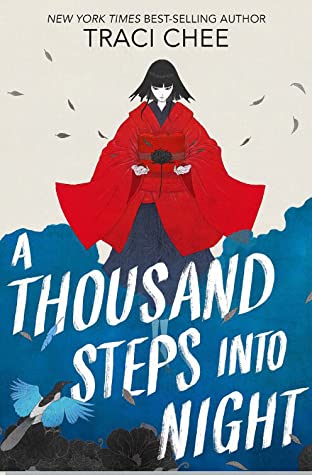
A Thousand Steps Into Nighty by Traci Chee Age: Young Adult
Genre: Fantasy
Miuko is a servant girl working in her father’s inn. Rumor said that her mother was a flighty nature spirit who abandoned Miuko and her father when she was a small girl, but the villagers mostly know her as being overly loud and clumsy for a girl.
While running an errand for her father, Miuko finds herself the victim of a demon’s curse. Together with Geiki, a friendly magpie spirit, Miuko races to find a way to reverse the curse before it becomes permanent, even as a demon prince thwarts her attempts to do so.
A Thousand Steps Into Night is inspired by Japanese mythology (inspired by, but author Traci Chee has created her own world and mythology for this fantasy tale). In a world filled with demons, nature spirits, and vengeful ghosts, Miuko must navigate her way toward a finding a cure for her curse, even as she discovers new freedoms in breaking the male-dominated norms of Nihaoi. Will she be able to break the curse and return to her life as a serving girl in her father’s inn? As the power of her curse grows, will she want to?
A Thousand Steps Into Night has a fairy tale feel to it in its story-telling. Fans of fairy tales and folklore will enjoy this dark tale, though hesitant readers may find the use of footnotes (to define the Nihaoian vocabulary that is sometimes used) a little off-putting. However, the use of footnotes is sparing, usually only two or three per chapter, so this may not be a deal-breaker.
A wonderful standalone tale with a norm-breaking main character, this is one to give to readers who are fans of fairy tales, folkore and mythology.
-
Book Review: Only A Monster

A solid, but flawed, start to a promising trilogy.
Joan was six years old when she told her grandmother she wanted to be Superman.
“You’re not a hero, Joan.” She bent her gray head confidingly. “You’re a monster.”
Ten years later, Joan’s life changes forever when she manifests her monster ability while on her way to a first date with her work crush, Nick.
Things spin out of control when she discovers that not only is Nick a legend among monsters, a monster slaying hero from monster fairy tales, but that her family has been killed and she is now on the run with a boy named Aaron Oliver, a member of a rival monster family that hates her own.
If you pick up this book expecting werewolves, vampires, and goblins, you’ll be disappointed. Monsters in this world look human, but all have a shared ability that harms humans to use. It’s not their appearance that makes a monster a monster; it’s what they can do.
This inaugural book to a new trilogy is a solid, if flawed, beginning to a new trilogy by Vanessa Len. I’m finding it difficult to describe the book without giving away too many spoilers, so let me try to simplify it to some basics:
Pros: Action, mystery, and an interesting concept.
Cons: Character development is lacking, romance elements are also underdeveloped, some mechanics of monster powers unexplained.
The cons aren’t deal-breakers: since this is the first book of a trilogy, there is opportunity to correct all of these in the future installments. But, for example, Aaron Oliver has many hints at greater depth, but those hints are left as mysteries as yet to be fully revealed, leaving him all to often being the stereotypical “hot but broody spoiled rich kid.” I wish a little more had been revealed in THIS book, but at least there is promise for more development to his character in the future.
The monster subculture is intriguing, with rival monster families and a Monster Court that the reader begins to learn about with Joan through the course of the book. There are elements to explore on the moral aspects of monster powers and what it means to be a hero or monster.
All in all, while I liked the book and enjoyed it, I can’t say I LOVED the book. On the other hand, there is room for the remaining books to improve on the first book’s flaws and I could find myself loving the trilogy as a whole when it’s done. I’d certainly be willing to recommend it to someone I thought would enjoy the concept.
-
Book Review and Commentary: Hey Kiddo!
So, why am I reviewing a book that’s already been around for 3 1/2 years?
- It’s a good – and important – book.
- It’s been under attack by people who want to ban it.
Graphic novelist Jarrett J. Krosoczka has created popular elementary-level graphic novels such as the popular Lunch Lady series (which is soon to be re-released in hardcover, full-color format!) and the Jedi Academy series. He is also the author of Hey Kiddo!, a graphic novelization of his early life through high school graduation.
Hey Kiddo! has received starred reviews from Booklist, Kirkus Reviews, and Horn Book, has found its way to multiple top book lists (such as Booklist’s Best Graphic Novels for Youth) or as a finalist for awards (such as the YALSA Quick Picks for Reluctant Young Adult Readers), and has won an Odyssey Award from the American Library Association.
Here in Iowa, Hey Kiddo! was a 2020-21 Iowa Teen Award nominee, and is currently a 2021-22 Iowa High School Award nominee. Which means that most school and public libraries with any budget are likely to have at least one copy. Between my middle and high school libraries, I have five copies on the shelves. And I’ve recommended it to the district’s counselors.
Wow, so what’s the controversy? Well, it seems some people think the language is too vulgar and want it pulled from school library shelves.
My take: yeah, the book has a few F-bombs and a few “damns” and “hells” and such. But it’s also nothing that any middle or high school kid hasn’t heard at home, at the movies, or in the hallways at school during passing. I would be curious to know what the home environment is for parents who have challenged this book and what sort of language is used there, or what movies their children are allowed to watch.
And the book is an autobiography. Krosoczka is trying to convey what his life was like growing up, and it was a difficult life. Why is this book important? Let me quote School Library Journal on that:
“A compelling, sometimes raw look at how addiction can affect families. A must-have, this book will empower readers, especially those who feel alone in difficult situations.”
You see, Krosoczka’s mother was an addict. He was raised by his grandparents from the age of about three because his mother was in and out of jail and rehab. And he didn’t know who his father was – he didn’t even learn his father’s first name until he was fourteen. His coping mechanism was his love of art.
And yet, despite this background, Krosoczka grew up to be a successful graphic novelist. We talk about the importance of examples and role models, so it’s ironic that we want to bury an example like this over a little foul language. The truth is, this book is an important example for kids going through tough times in their own lives, showing them that it is possible to get through those hard times and that we’re not predestined to let those times define us in a negative way.
Instead of being banned, Hey Kiddo! is a book to promote, especially to reluctant readers or readers who may have difficult backgrounds themselves. Censorship of what is ultimately an inspirational story over language that pretty much any teenager in the country is quite familiar with, and is realistic in context, is a shame.
-
Critical Thinking: The Strawman Fallacy

I could while away the hours,
Conferrin’ with the flowers,
Consultin’ with the rain.
And my head I’d be scratchin’
While my thoughts were busy hatchin’
If I only had a brain.Let’s talk about strawmen. No, not the kind you saw in the Wizard of Oz. I’m talking about the kind you find all over the place on the internet. Or in politics. Or in a lot of personal arguments.
The Strawman Fallacy is a logical fallacy, so first let’s cover what that means. Logical fallacies are errors in reasoning that undercut an argument’s validity. A formal logical fallacy is an error in the actual logical structure of an argument, while an informal fallacy can be from other errors.
So, what’s a strawman fallacy? It’s when one party in a debate or argument distorts or misrepresents the argument being made by another party, usually to make the argument easier to attack. Let’s look at some examples.
Statement: “The United States spends 11 times as much on defense as the next 11 countries combined, so there’s no need to increase the defense budget.”
Response: “Why do you want the U.S. to be defenseless?”
The response misrepresents the original statement. There is a LOT of room between “not increasing the defense budget” and “leaving the U.S. defenseless.” Here’s another:
Statement: “I prefer cats over dogs.”
Response: “So you’re saying you hate dogs?”
The fallacy here is that obviously it’s possible to prefer cats over dogs without actually hating dogs.
Let’s look at one more that’s a little more topical to the last couple of years:
Statement: “The COVID-19 vaccines are not 100% effective, so until the pandemic is under control people should still take precautions, social distance, etc.”
Response: “If the vaccines don’t work, why bother getting vaccinated?”
Again, a lot of room between “the vaccines aren’t 100% effective” and “the vaccines don’t work, so why bother.” But I’ve lost count of how many times I’ve seen this and similar arguments online during the pandemic regarding vaccines and other protective measures.
There are a lot of variations possible with strawman arguments, but the key is that one side is misrepresenting the actual argument being made by the other side, sometimes to an extreme level to make it easier to attack or to make the other side’s position to appear extremist or ridiculous (or both).
Whether in the “real world” or on the internet, strawman arguments pop up all the time, so keep your radar up for them. The best defense is to call out when the other side is misrepresenting what you are arguing, and then clearly restating your position. If the other side continues to misrepresent what you’re saying, it’ll become obvious they aren’t interested in a fair discussion.
Until next time, folks! Stay Curious!
Dorothy: How do you talk if you don’t have a brain?
Scarecrow: Well, some people without brains do an awful lot of talking don’t they?
-
Google Fu: Get the best out of your search
Today I’m going to talk about that ubiquitous search engine: Google. Let’s face it, most people use it for nearly all their online searching (it is by far the most popular search engine: as in around 86% of all desktop searches in December 2021, and 3.5 billion searches daily). So let’s take a look at some ways to improve your searches while using it.
Of course, before we get going, I should mention that for most average searches, for example your quick n’ dirty “restaurants near me” type of search, there’s not much needed other than a few basic keywords. Google has spent a lot of effort trying to make using their search engine as straightforward as literally typing in your question. But if you’re not getting results that are what you need, or you’re digging a little deeper into a research topic, there are a few things you can do to tighten up your search.
Operators
Search engines, including Google, use “operators,” or commands or symbols that help define a search. Here are a few that might be of use:
Quotation Marks: If you put your search terms in quotation marks, you are telling Google to search specifically for that phrase. Imagine, for example, you have a piece of a song stuck in your head and want to figure out what it is. So you type in “he’ll rip your lungs out Jim” and quickly find out that it’s from Werewolves of London by Warren Zevon.
And now that I’ve got that song stuck in my head, I’m going to share the ear worm:
Ok, now, Google might well have returned the correct results without the quotation marks, but by adding them you force it to look at those specific words in that specific order, and increase the likelihood of getting the right results. This is especially useful if the phrase you’re looking at has a lot of common words in it.
Minus sign: By placing a minus sign (-) in front of a term, you’re telling Google to disregard results that have that term in it. For example, maybe you want to do some research on lions, but you want to make sure you don’t get bogged down in results about the Detroit Lions. So, your search looks likes this:
Lions -Detroit -football -mascot
That tells Google to disregard any results that include the terms Detroit, football, or mascot, and so the results you want about the animal are now much more likely to end up at the top of the search.
Site: By putting site: (the word “site” followed by a colon) and then putting a web address after it (without any spaces!), and then putting in your search terms, you’re telling Google you only want results from that website. So, let’s say you want to search for something on the New York Times website. You’d craft your search like this:
site:nytimes.com [search terms]
You can also do with just domains, like .gov, or .edu, so if you just want results from government websites, for example, you can narrow your search to that particular domain.
OR: This one actually expands rather than narrows a search. By putting OR (capital letters) between two search keywords, you’re telling Google to give you results that include either term. Why not just put both terms in the search bar and call it good? Because then Google starts off looking for sites with BOTH terms, rather than just one or the other.
Creating a search query
When you’re creating a search, for probably 90+% of your searches you’re probably good with just typing in a phrase or a few keywords. But if you want to really nail down your search for some important information, here are some additional tips:
Use those operators: Yeah, those operators I talked about in the first part of this post? Use ’em.
Be specific: the more specific your terms are, the more accurate your search is likely to be. Just putting in “fish” will get you a lot less specific results than “tropical fish,” for example, and a search for “zebra fish” will be more specific still.
Ditch common words: Most search engines ignore words like “a,” “and,” “but,” “the,” etc. so don’t bother cluttering up your search with them. The exception is if you’re including them in quotation marks to make a specific phrase inquiry.
Try another search engine: Google is by far the most common search engine, but there are many others. Try Bing, or DuckDuckGo, or Yahoo, for example. Each uses a different algorithms, so can get you somewhat different results. If you’re not getting the results you want, try a different search engine and see what happens.
Regroup and try again: If you still aren’t getting the results you want, take another look at your search. Are there better ways you could phrase it? Different terms you could use? Try some different keywords and see if the results improve.
A Word About Algorithms
Most search engines use their own home brewed algorithms – their own set of rules and instructions – to get results for you. That’s why different search engines might get you different results even though you’re using the same search terms.
But a word of warning — a lot of sites track your online activity (Google is pretty notorious for this) and then try to plug that information into their algorithm. The idea is that by doing so, you’ll get results you’re more likely to like.
Sounds good, right? Tailored search results from a site that already kinda knows what you want?
In most cases, no big deal. But… it does result in skewing your results, and means that if you do a search and someone else does the exact same search, the results might turn out differently. Something to keep in mind when searching.
And, more disturbingly, by tailoring results this way, search engines might send people down “rabbit holes” or hem them into “information silos” where they only get certain types of results. Conspiracy theorists might tend to get results that reinforce their beliefs, while leaving out results that might counter them (i.e., someone who is anti-vaccine in their views might tend to get results that reinforce those anti-vaccine views, giving them the false sense that their views are both correct and more widely held than they actually are). Politically active people might tend to get results that, again, reinforce their particular beliefs and avoid countering points of view. So, be aware of this possibility as you search!
Go Forth and Search!
Hopefully you’ll find a kernel or two of useful information in the above that will help you get better results out of Google. These tips in general apply to other search engines as well (though you may need to find a help section on the operators, as not all search engines use the same ones). One big key takeaway I think is the “regroup and retry” advice – if at first you don’t get the results you need, don’t be afraid to try again, whether with a different search engine or with new search terms.
Until next time, folks! Stay curious!
-
TikTok, the War on Ukraine, and 10 Features That Make the App Vulnerable to Misinformation
I hadn’t planned another post so soon, but this came to my attention and deserved a link because of the information literacy implications and the popularity of Tik Tok.
Please give the link below a read. Here is the intro paragraph:
“As Vladimir Putin continues to wage war in Ukraine, the video sharing app TikTok is an increasingly popular source of digital content about the invasion. Videos on the platform feature on-the-ground updates, testimonials from within Ukraine, and calls to action (such as requests for donations and political advocacy). Some of these are authentic, and some are hoaxes. How can we tell the difference?”
TikTok, the War on Ukraine, and 10 Features That Make the App Vulnerable to Misinformation
-
Critical Thinking: The Barnum Effect
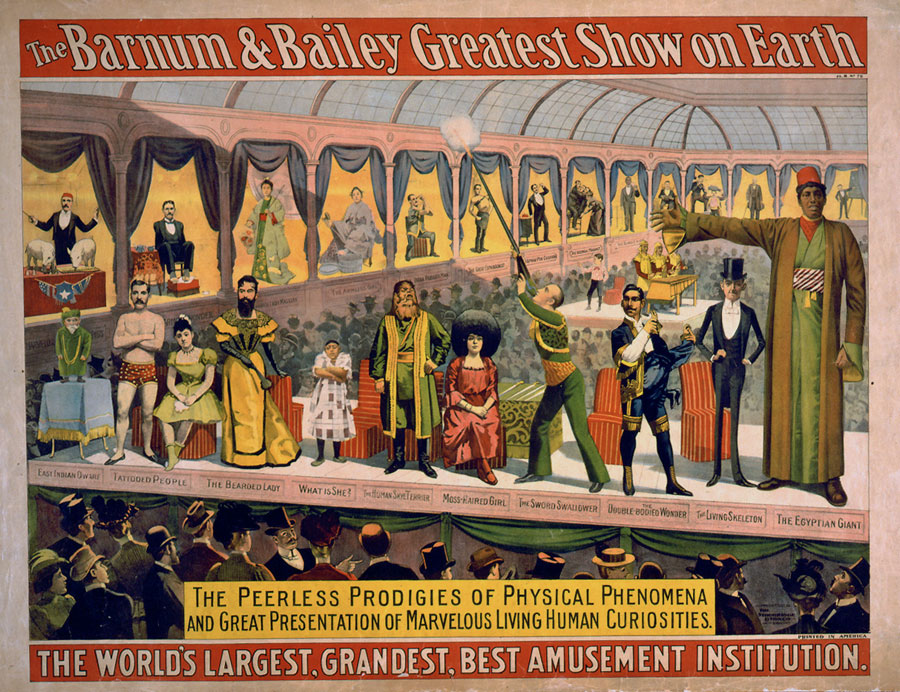
Barnum & Bailey Poster, circa 1898-99. Wikicommons. Part of this blog is a way for me to talk about critical thinking, and part of critical thinking is thinking ABOUT thinking. As in, being aware of when you’re tripping yourself up in your thinking, or when someone else is falling prey to sloppy or illogical thinking.
So let’s start with an example of what’s called a cognitive bias. In this case, a bias often called The Barnum Effect.
Cognitive Biases
Let’s start first of all with explaining what cognitive bias is. At it’s simplest, it’s an error in processing or interpreting information that we take in from the world around us. All of us are prone to some degree of cognitive biases, but the more you’re able to think about your thought processes and watch for these, the less likely you are to have them lead you astray.
Dr. Forer’s Personality Test
Now let’s have a little story.
Once upon a time, there was a professor named Dr. Bertram Forer. Dr. Forer was a professor of psychology, and one day in 1948 he gave a test to 39 of his students. He told them it was a personality test and he would soon give them a personalized result from the test that would describe their personality.
About a week later, Dr. Forer handed each of his students a card with list of personality traits on it based on the test they’d taken. Here is an example of the the results on one of the cards:
- You have a great need for other people to like and admire you.
- You have a tendency to be critical of yourself.
- You have a great deal of unused capacity which you have not turned to your advantage.
- While you have some personality weaknesses, you are generally able to compensate for them.
- Your sexual adjustment has presented problems for you.
- Disciplined and self-controlled outside, you tend to be worrisome and insecure inside.
- At times you have serious doubts as to whether you have made the right decision or done the right thing.
- You prefer a certain amount of change and variety and become dissatisfied when hemmed in by restrictions and limitations.
- You pride yourself as an independent thinker and do not accept others’ statements without satisfactory proof.
- You have found it unwise to be too frank in revealing yourself to others.
- At times you are extroverted, affable, sociable, while at other times you are introverted, wary, reserved.
- Some of your aspirations tend to be pretty unrealistic.
- Security is one of your major goals in life.
Dr. Forer then asked his students to rate on a scale of 1 (very poor) to 5 (very good) how accurate they felt their results were. The average score was 4.30, so the students felt these results were pretty accurate.
Except…there was a catch.
All 39 students received the same results. The list of 13 results above? Every student got the same list. That’s not just one result from the test. It’s the result every student received.
So what’s the deal? How did 39 different students all agree that the test was very accurate at describing them, even though they all got exactly the same results?
The Barnum Effect
The answer: The Barnum Effect (sometimes called the Forer Effect, but the first name has gained more popularity in recent years). People have a tendency to believe vaguely generic statements describe them specifically. Usually, this applies more to positive statements than negative, as people tend to want to believe good things about themselves. Also, adding qualifiers like “at times” increases the likelihood that the person will believe it applies to them.
So What?
Well, ok, so what’s the big deal if people fall prey to a little flattery now and then?
Well, advertisers can use this to tweak their advertisements, for one. If you subscribe to a media content provider that has a “Recommended for you” type of feature – that’s a little taste of trying to use the Barnum Effect. The actual recommendations offered might be pretty generic and in actuality might be offered to 90% of the apps users, but by adding “For you” to it…well, it makes it seem a little more personal, and maybe you’re more likely to click on one of the recommendations to check it out.
But more nefariously, scammers can use it, too. The classic example of this is psychics, astrologers and palm readers. Reading a newspaper astrology column is pretty harmless, but there are people who spend thousands of dollars for psychic readings that are as accurate as Dr. Forer’s personality test. And of course there’s just something as basic as “You look like someone who knows a good deal when you see it!” is a classic sort of statement, whether it’s just an opening to a legit sales pitch to soften up the customer’s resolve or a con artist stroking a mark’s ego.
Personality Tests
Personality tests also rely on this cognitive bias. Sure, have some fun with “What kind of moss are you?” personality tests on social media, but understand they’re just for fun and no more accurate than astrology or palm reading.
But then there are the professional personality tests – tests like the famous Myers-Briggs test.
Before I go on, allow me to provide a bit of insight into how the Myers-Briggs test came about with this short from Adam Ruins Everything:
Of course, the Myers-Briggs folks will be quick to tell you that they are reliable, etc. But given that people can get very different results taking the test a few days apart…how reliable can it really be?
And yet companies have used this as part of their basis for promotions, and there are any number of articles out there online expounding on CEO’s with certain Myers-Briggs personality types, or which personality types make for the best worker bees, or entrepreneurs, or whatever.
<pause to receive hate mail from Myers-Briggs fans…>
Ok, so back on track. Where does this leave us?
What can we do?
Awareness and skepticism are our best defense. Just be aware of your own thinking and be a little skeptical of generic-sounding statements, especially flattery. Step back mentally and think about the motives behind offering such statements – is someone trying to influence you to do something, for example? The best defense against falling prey to a lot of cognitive biases is time – actually pause and take a moment to think about your current thinking, rather than rushing forward with what might be flawed thinking.
Until next time folks. Stay curious!
Sources & Further Reading (in no particular order):
Why do we believe our horoscopes?
Barnum Effect – Encyclopedia Britannica
The Fallacy of Personal Validation: A Classroom Demonstration of Gullibility by Bertram R. Forer
Barnum Effect – APA Dictionary of Psychology
-
Book Review: Ghost In The Headlights
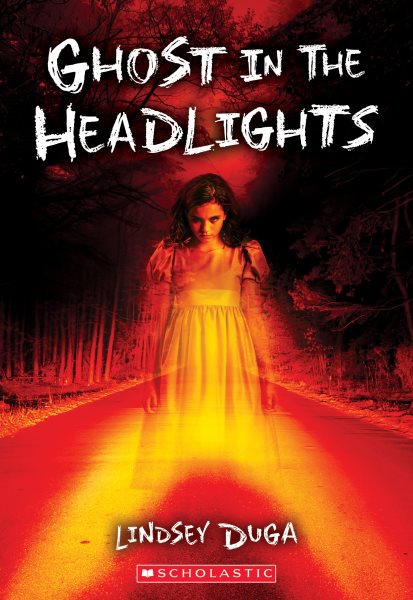
The Ghost In The Headlights by Lindsey Duga Age Range: Middle Grades
Genre: Horror
Twelve-year old Brianna Jensen isn’t happy to be sent to stay with her uncle for two months while her mother trains for a new job, but things get even worse when strange events begin to happen along lonely Shadowrun Road, where her uncle lives. Sounds of footsteps following her, glimpses of a girl in an orange dress, a driverless car, and worse yet, the refusal of her classmates to even speak about what might be happening even though they apparently know something. All she can get from them is that she might be the next victim of the ghost if she’s not careful.
Can Brianna solve the mystery of the Ghost of Shadowrun Road before it’s too late?
This book (published by Scholastic) is a scary story for middle graders. A decent intro to horror for this age group, it taps into the vein of “haunted road” stories found in folklore around the country.
Relationships and characters seem a little 2-dimensional, and older readers might find the story a little tame for their taste. Still, younger budding horror fans may find this to be a worthwhile addition to their reading list.
Stay Curious
A blog of books, librarianship, critical thinking, and other musings.

 Stay Curious